
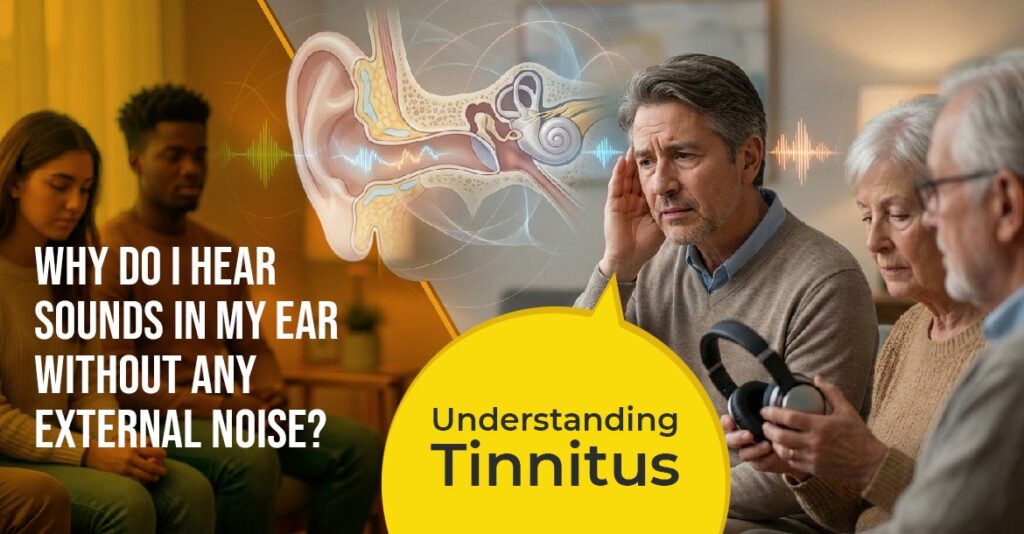
Understanding Tinnitus:
A ringing, buzzing, or hissing sound in the ears is often referred to as tinnitus. These sounds are heard by the person but are not external sounds. For some, it is a minor annoyance; for others, it can significantly impact daily life, sleep, and mental health.
It is important to understand that tinnitus is not a disease in itself; rather, it could be a symptom of underlying health issues, such as auditory nerve damage, ear injuries, or natural age-related hearing loss.
You are far from alone if you experience this. Research indicates that tinnitus affects approximately 15% of the global population. While it can impact anyone at any stage of life, it is most frequently diagnosed in adults between the ages of 40 and 80.
This article explores the flow of tinnitus from its initial identification to the various ways it can be managed and treated.
What is Tinnitus?
The perception of noise or ringing in the ears when there is no outside sound is known as tinnitus. While often called “ringing in the ears,” it can manifest as many different sounds.
There are two primary categories:
- Subjective Tinnitus: The most common type. Only you can hear the sound. It’s usually caused by issues in the outer, middle, or inner ear, or problems with the auditory nerves.
- Objective Tinnitus: A rare type that a doctor can actually hear during an ear exam. This is often caused by a physical issue, such as a blood vessel problem or muscle contractions.
Common Symptoms
The specific sound of tinnitus varies from person to person. You may hear:
- Ringing or Buzzing: The most frequent descriptions.
- Roaring or Whistling: Often described as a “seashell” sound or whistle-like sound.
- Clicking: This may indicate muscle contractions in or around the ear.
- Cicadas or cricket (the insect) like sounds.
- Pulsing or Rushing: Known as pulsatile tinnitus, a person can hear a heartbeat in the ear and may be related to blood pressure or vascular issues.
The sound can be constant or come and go, and it often feels more intense in quiet environments (like when trying to sleep).
What Causes Tinnitus?
Tinnitus is frequently linked to damage in the auditory system, but the specific triggers are diverse:
- Age-Related Hearing Loss: As hearing fades with age (affecting 1 in 3 adults over 65), the brain receives less external stimulation. When hearing loss occurs, the brain may increase sensitivity (‘central gain’), which can cause tinnitus perception. This is a common complaint of people with early hearing loss.
- Noise-Induced Hearing Loss (NIHL): Exposure to loud sounds—whether a sudden blast like a gunshot (armed forces personnel) or years of loud music with recent increasing use of earphones and headphones or Bluetooth devices. These damage the delicate hair cells in your inner ear, leading to persistent noise.
- Ear Injuries & Head Trauma: Physical trauma can damage the nerves or brain centres responsible for hearing. When caused by injury, the ringing often occurs in only one ear.
- Ear Blockages & Infections: Excess earwax or fluid from an infection can create temporary hearing loss and pressure changes, which trigger internal noise until the blockage is cleared.
- Medications: Certain drugs (ototoxic medications), including some high-dose aspirin, specific antibiotics, and certain antidepressants, can trigger tinnitus as a side effect.
- TMJ Disorders: Issues with the jaw joint (located very close to the ear) can affect the surrounding ligaments and nerves, causing clicking, ringing, humming or buzzing.
Less Common Risk Factors:
- Eustachian Tube Dysfunction: When the tube connecting your ear to your throat stays expanded or blocked, it causes a feeling of “fullness” and phantom sounds or a popping water bubble sound.
- Ménière’s Disease: An inner ear disorder caused by abnormal fluid pressure, often resulting in vertigo, fluctuating hearing loss and fullness of the ear.
- Otosclerosis: A condition where the small bones in the middle ear stiffen due to abnormal bone growth, disrupting how sound travels to the inner ear.
- Blood Vessel Disorders: Known as pulsatile tinnitus, this is often caused by reduced blood flow or high blood pressure, making you hear a rhythmic noise that matches your heartbeat or the tempo increases or decreases with the pulse rate.
- Vestibular Schwannoma: A rare, noncancerous tumour of the nerve connecting the inner ear to the brain.
- Autoimmune Diseases: Conditions like Lupus or Rheumatoid Arthritis can cause the body to mistakenly attack the healthy tissues of the ear.
Finding the cause of Tinnitus?
Tinnitus is a complaint, not a diagnosis.
To find the root cause, the healthcare professional (usually an Audiologist or ENT) may perform one or several tests:
- Hearing (Audiological) Exam: You’ll sit in a soundproof room and listen to tones through headphones to measure hearing loss.
- Movement Tests: Your doctor may ask you to move your eyes, clench your jaw, or move your neck. If the sound changes during these movements, it helps pinpoint a physical cause like TMJ or neck issues.
- Imaging Tests: CT or MRI scans may be ordered if the doctor suspects a structural issue or a tumour (like a vestibular schwannoma).
- BERA, OAE, E Coch G (Electro Physiological tests of the cochlea, nerves, and brain)
Treatment and Management Options
1. Addressing Underlying Causes
If the tinnitus is caused by a specific issue, treating that issue often reduces the sound. This includes earwax removal, treating blood vessel conditions, or switching medications that may be causing the noise, for TMJ-related tinnitus, soft diet, a bilaterally equal bite, and occasionally MIRA (minimally invasive retro-signoid approach) for neuro-vascular conflict-related tinnitus.
2. Sound Suppression (Masking)
- White Noise Machines: Devices that produce “static” or nature sounds (rain, ocean waves) to help drown out the internal ringing. Even many apps are available on smartphones.
- Hearing Aids: By making environmental sounds louder, hearing aids make the internal tinnitus less noticeable.
- Masking Devices: Worn in the ear like a hearing aid, these produce a continuous, low-level white noise.
3. Behavioural Therapy
- Tinnitus Retraining Therapy (TRT): A program that combines sound masking with counselling to teach the brain to “ignore” the sound, much like we sleep on a bus or train, ignoring the sound.
- Cognitive Behavioral Therapy (CBT): Focuses on changing your emotional reaction to tinnitus. It helps reduce the anxiety and stress that can make the ringing feel softer.
Lifestyle and Prevention
Prevention is the best defence against worsening tinnitus. Protecting your ears today can prevent years of phantom noise in the future.
- Use Hearing Protection: If you work in a loud environment (construction, landscaping) or enjoy loud hobbies (firearms, listening to music using earphones), always wear over-the-ear muffs or quality earplugs.
- Turn Down the Volume: When using headphones, follow the 60/60 rule, which states that you should listen for no more than 60 minutes each day at a volume of no more than 60%.
- Limit Alcohol and Nicotine: These substances can affect blood flow to the ear, which may trigger or intensify ringing.
- Manage Stress: High levels of cortisol (the stress hormone) can exacerbate the perception of tinnitus. Practices like yoga, meditation and physical exercises are proven to help.
When to See a Professional
Tinnitus isn’t always a cause for alarm, but certain “red flags” mean you should book an appointment with an ENT specialist.
Schedule a visit if you experience:
- Persistent Noise: Ringing that lasts longer than one week.
- Balance Issues: Feelings of dizziness or vertigo.
- Heartbeat Sounds: If the noise rhythmically matches your pulse.
- Single-Ear Tinnitus: Noise that is only occurring in one ear.
Urgent Note: If you experience sudden hearing loss along with tinnitus, seek medical attention immediately. Treatment is most effective when started within 72 hours (golden window).
About Indorewala ENT Hospital, Institute & Research Centre
Patients with complicated ENT diseases, such as tinnitus and hearing issues, receive thorough examination and evidence-based treatment at Indorewala ENT Hospital, Institute & Research Centre. Recognised as the Best ENT hospital in Maharashtra, the institute combines advanced diagnostics, experienced specialists, and patient-centric treatment protocols. With an in-house hearing aid centre in Nashik, the hospital offers complete hearing assessment, rehabilitation, and long-term management under one roof, ensuring accurate diagnosis and lasting relief.
Frequently Asked Questions (FAQ)
1. Will my tinnitus ever go away?
It depends on the trigger. Ringing after a loud concert, a DJ, or a response to a firecracker sound is usually temporary. However, if the sound persists for more than 24 hours, it may be chronic. While there is no “universal cure,” most people find that with the right management, many people find that tinnitus improves significantly with time and proper management.
2. Can you live a full life with tinnitus?
Absolutely. Tinnitus does not affect your life expectancy. While the sound can be frustrating, many people lead high-quality lives by using sound therapy and stress management to reduce its impact.
3. What should I avoid if my ears are ringing?
- Physical exercises
- Total Silence: This is the biggest mistake. In a silent room, your brain focuses more on the internal noise. Use soft background music or a fan.
- High Stress & Poor Sleep: Both of these act as “volume knobs,” making the tinnitus feel much louder than it actually is.
- Loud Environments: Protect your ears from further damage by wearing earplugs in noisy areas.
4. Are there foods that make it worse?
While research is ongoing, some people find their symptoms flare up after consuming:
- High Salt: Can restrict blood flow and increase blood pressure.
- Caffeine: Acts as a stimulant that may heighten your awareness of the noise.
- Saturated Fats: Can impact long-term vascular health, which is linked to ear health.