
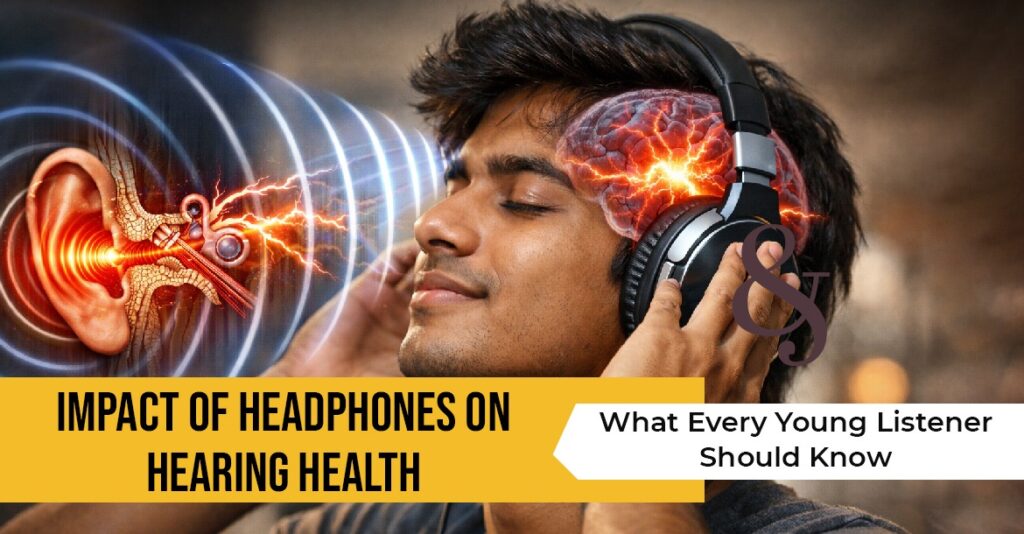
Headphones and earphones have become an essential part of modern life. From listening to music and attending online meetings to gaming and watching videos, many people spend several hours each day with headphones on. While these devices offer convenience and entertainment, excessive or improper use can harm your hearing over time.
One growing concern among audiologists is headphone hearing damage, which occurs when the ears are exposed to loud sound levels for extended periods. Understanding the risks and following healthy listening habits can help protect your hearing and prevent long-term damage.
How Headphones Affect Your Hearing
The human ear contains delicate hair cells inside the inner ear that convert sound vibrations into signals the brain can understand. When sound enters the ear at high volumes for long periods, these hair cells can become damaged.
Unfortunately, these cells do not regenerate. Once they are damaged, hearing loss may become permanent. Continuous exposure to loud sound through headphones can gradually lead to noise-induced hearing loss, a condition that develops slowly and often goes unnoticed in its early stages.
Some common factors that increase the risk include:
- Listening to music at very high volumes
- Using headphones for many hours daily
- Using in-ear earphones that sit close to the eardrum
- Increasing volume to block the surrounding noise
Signs Your Headphones May Be Damaging Your Hearing
Hearing damage usually develops gradually, which makes it difficult for many people to notice early symptoms.
Some common warning signs include:
- Ringing or buzzing sounds in the ears
- Difficulty understanding speech in noisy environments
- Feeling that sounds are muffled
- Increasing headphone volume frequently
- Ear discomfort after long listening sessions
If these symptoms occur regularly, it is important to consult an ENT specialist for evaluation.
Safe Noise Exposure Standards
Hearing safety guidelines are based on recommendations from leading authorities:
NIOSH (National Institute for Occupational Safety and Health):
Recommends a safe limit of 85 dB for 8 hours, using a 3-dB exchange rule (every 3 dB increase halves safe exposure time). This is the more protective, health-focused standard.
OSHA (Occupational Safety and Health Administration):
Sets a legal workplace limit of 90 dB for 8 hours, using a 5-dB exchange rule. This is the minimum regulatory standard.
📊 Safe Exposure Chart (NIOSH Guideline)
Sound Level (dB) Maximum Safe Exposure Time
85 dB 8 hours
88 dB 4 hours
91 dB 2 hours
94 dB 1 hour
97 dB 30 minutes
100 dB 15 minutes
⚠️ In Simple Terms
As sound gets louder, the safe listening time drops rapidly — which is why prolonged headphone use at high volume can damage hearing.
👉 Example:
At 85 dB → safe for 8 hours
At 100 dB → safe for only 15 minutes
Advice for Protecting Your Hearing When Using Headphones
You don’t have to stop using headphones completely to protect your hearing. A few simple ear protection tips can make a big difference.
Keep Volume Moderate
Avoid turning the volume too high to overcome background noise.
Take Regular Breaks
Allow your ears to rest after prolonged listening sessions.
Use Over-Ear Headphones
Over-ear headphones are generally safer than in-ear devices because they are positioned farther from the eardrum.
Avoid Sleeping with Earphones
Listening to audio while sleeping can expose the ears to sound for many hours without breaks.
Watch for Early Symptoms
If you experience ringing in the ears or temporary hearing difficulty, reduce headphone usage and seek medical advice.
Why Young People Are at Higher Risk
Students, gamers, and working professionals are among the most frequent users of headphones today. Online learning, remote work, and streaming entertainment have significantly increased daily headphone use.
Because hearing damage occurs gradually, many young listeners may not notice early symptoms. Awareness and preventive measures are essential to avoid long-term hearing issues and maintain good hearing health.
About Indorewala ENT Hospital
Advanced ear, nose, and throat care is the focus of the renowned medical facility Indorewala ENT Hospital, Institute & Research Centre. Known for its experienced specialists, modern diagnostic technology, and patient-focused treatment approach, the hospital has earned recognition as one of the Best ear hospital in India. The institute also operates a specialized hearing aid centre in Nashik, providing comprehensive hearing evaluation and advanced hearing aid solutions for patients with hearing loss.
When to See an ENT Specialist
If you experience persistent ringing in the ears, hearing difficulty, or discomfort after prolonged headphone use, it is important to consult an ENT specialist. Early diagnosis can help prevent further damage and ensure appropriate treatment.
Patients seeking expert care often visit Indorewala ENT Hospital, Institute & Research Centre, widely regarded as the Best ear hospital in India for advanced ENT treatment and hearing care services. The hospital also offers specialized support through its hearing aid centre in Nashik, where audiologists help patients choose suitable hearing solutions.
Conclusion
Headphones are a convenient part of everyday life, but using them responsibly is essential for protecting your hearing. Listening at moderate volumes, taking regular breaks, and recognizing early warning signs can significantly reduce the risk of hearing damage.
By adopting healthy listening habits and seeking professional medical guidance when needed, you can continue enjoying music, podcasts, and online content while keeping your hearing safe for the future.